
Tashkovon kulttuuri näyttää olevan hankalampi ajoittaa kuin Krotovo, koska useat artikkelit viittaavat vain yhteen radiohiiliajoitusten sarjaan, joka sisältää keskenään ristiriitaisia tuloksia. Näiden tulosten perusteella Tashkovon kulttuuri olisi syntynyt myöhemmin kuin Krotovo, ehkä kolmannen vuosituhannen eaa. viimeisellä neljänneksellä.
"Monuments of the Tashkov culture of the Bronze Age have been studied in the forest and forest-steppe zones of the Tobol basin, for which even the relative chronology remains largely debatable. Isolated stratigraphic observations point to the pre-Srubna-Alakul period, although some authors are of the opinion that synchronization is possible (Stefanov, Korochkova, 2000. Pp. 81–87). Radiocarbon argumentation is of little use in this dispute so far. Of the nine dates (Kovaleva, 2005. P. 106), two belong to the 4th millennium BC and cannot be used. The rest also do not demonstrate homogeneity and, when summing up the probabilities, give a fairly wide interval – 2290–1880 (2900–1600) BC. In this form, the dates allows us to state the general synchronicity with the Seima-Turbino phenomenon and the Sintashta-Abashevo period." [1]
"The chronological position of the Tashkov complexes, despite the availability of fundamental studies, remains one of the most debated problems. [...] The calibrated age of the Tashkovo culture monuments, based on a series of radiocarbon dates, places them in the range of 2050±200 years BC (Kovaleva, 2005, p. 105)." [2]
"One of the authors of the article attributes Tashkov to the Early Bronze Age, suggesting that this culture preceded the Seima-Turbino (ST), Sintashta, and Krotovo complexes, and generally developed within the pre-Seimin chronological horizon (Kovaleva, 1997). The other two authors, on the contrary, believe that Tashkov metalworking was carried out in the early phase of the Eurasian metallurgical province (22nd/21st–18th/17th centuries BC) (Kuzminykh, Degtyareva, 2012, pp. 224, 238)." [3]
"[S]ome authors attribute the Tashkov antiquities to the Early Bronze Age, while others, for various reasons, assume their synchronicity with the Seima-Turbino, Sintashta, and Petrovsk monuments (Degtyareva et al., 2014, p. 23). Radiocarbon argumentation comes down to less than ten dates with a huge range of values. Their summation merely confirms the presence of two intervals that have no points of contact: with a probability of 68.2% — 4000–3600 (13.8%) and 2300–1700 (54.4%) BC; with a probability of 95.4% — 4400–3300 (23.8%) and 3100–1600 (71.6%) BC. The trail of early values is formed by two of the seven intervals with a very large standard deviation (430 and 150 years), the calibrated interval of which falls on the 5th–4th millennia BC, i.e. coincides with the earliest Eneolithic values. It is unlikely that these figures can be accepted; it remains to turn to the rest, the summation of which gives: 2290–1880/2900–1600 BC (Fig. 5), which is, of course, too broad for strict judgments, but corresponds well to the general chronology of the Urals and Western Siberia (Molodin et al., 2014, Fig. 2)." [4]
[1] Molodin, V.I., Epimakhov, A.V. & Marchenko, Zh.V. (2014). Radiocarbon chronology of the South Urals and the south of the Western Siberia cultures (2000-2013-years investigations): Principles and approaches, achievements and problems.
[2] Stefanova, N.K. & Stefanov, V.I. (2014). Поселение Ташковской культуры Заводоуковское XIII.
[3] Degtyareva, A.D., Kovaleva, V.T. & Kuzminykh, C.V. (2014). Особенности цветной металлообработки племен Ташковской культуры нижнево Притоболья.
[4] Epimakhov, A.V. & Mosin, V.S. (2015). Хронология Зауральского энеолита.
Vesakoski, Salmela, Piezonka Uralic archaeolinquistics
Re: Vesakoski, Salmela, Piezonka Uralic archaeolinquistics
 Kirjoittaja merimaa » 17 Tammi 2025 01:02
- merimaa
- Lipevä lappilainen

- Viestit: 439
- Liittynyt: 17 Marras 2022 19:14
Re: Vesakoski, Salmela, Piezonka Uralic archaeolinquistics
Kirjoittaja merimaa » 17 Tammi 2025 02:42
Chernykh et al. (2017) ajoitti Koptjakovon kulttuuriin kuuluvalta Shaitanskij Ozeron kulttipaikalta 15 näytettä, joiden materiaali oli joko puuta tai hiiltä. Vanhin näyte sai ajoituksen 2198-2026 cal. BCE (±2σ (95,4%)), mutta oli sen vuoksi poikkeava, koska useimmat muut osuivat aikavälille 2000-1500 eaa.
Korochkova (2023) ajoittaa Koptjakovon kulttuurin vastaavasti toisen vuosituhannen eaa. ensimmäiselle kolmannekselle. Hän arvioi metalliesineiden ja keramiikan perusteella, että Shaitanskij Ozeron kulttipaikka olisi ollut käytössä yhtä aikaa Srubnaja-Alakul-kulttuurin ja Seima-Turbino-ilmiön kanssa.
"In the mountain-forest Trans-Urals, these processes are reflected by the Koptyakov archaeological culture of the first third of the 2nd millennium BC, the formation of which took place against the background of close integration of various cultural components: local autochthonous, alien Seima-Turbino, Alakul and, possibly, with the participation of groups of the Ural population. This conclusion follows from the analysis of the metal complex and ceramics of the reference site – the Shaitanskoye Ozero II sanctuary (Korochkova et al. 2020)." [2]
Toisaalta Korochkova mainitsee artikkelissaan Seima-Turbino-tyyppisen veitsen, joka on ajoitettu aiemmassa tutkimuksessa välille 2210–1970 BCE (Chairkina et al., 2014: 121). Sen perusteella näyttää mahdolliselta, että Seima-Turbino-ilmiö levisi Koptjakovon ja Tashkovon kulttuurien alueille suunnilleen yhtä aikaa, mikä on ihan uskottavaa siksi, että Tobol-joelta on keskiselle Uralille matkaa vain reilu 500 kilometriä (nykyisestä Tobolskin kaupungista Jekaterinburgiin).
"The appearance of the first bronzes of the Seima-Turbino type dates back to the same time. As particularly valuable evidence, one can consider a blade knife with a wooden handle from Section VI of the Gorbunovsky peat bog, the dating of which lies in the range of 2210–1970 BCE (Chairkina et al., 2014, p. 121, color illustration 3). An early position within the developed typology of Seima-Turbino bronzes is also occupied by a celt found in the vicinity of the city of Artemovsky (Korochkova et al., 2020, fig. 50: 7). [2]
[1] Chernykh, E.N., Korochkova, O.N. & Orlovskaya L.B. (2017). Issues in the calendar chronology of the Seima-Turbino transcultural phenomenon.
https://journal.archaeology.nsc.ru/jour ... 66/334.pdf
[2] Korochkova, O.N. (2023). Middle Trans-Urals and Western Siberia: From the Stone Age to the Metal Age.
Korochkova (2023) ajoittaa Koptjakovon kulttuurin vastaavasti toisen vuosituhannen eaa. ensimmäiselle kolmannekselle. Hän arvioi metalliesineiden ja keramiikan perusteella, että Shaitanskij Ozeron kulttipaikka olisi ollut käytössä yhtä aikaa Srubnaja-Alakul-kulttuurin ja Seima-Turbino-ilmiön kanssa.
"In the mountain-forest Trans-Urals, these processes are reflected by the Koptyakov archaeological culture of the first third of the 2nd millennium BC, the formation of which took place against the background of close integration of various cultural components: local autochthonous, alien Seima-Turbino, Alakul and, possibly, with the participation of groups of the Ural population. This conclusion follows from the analysis of the metal complex and ceramics of the reference site – the Shaitanskoye Ozero II sanctuary (Korochkova et al. 2020)." [2]
Toisaalta Korochkova mainitsee artikkelissaan Seima-Turbino-tyyppisen veitsen, joka on ajoitettu aiemmassa tutkimuksessa välille 2210–1970 BCE (Chairkina et al., 2014: 121). Sen perusteella näyttää mahdolliselta, että Seima-Turbino-ilmiö levisi Koptjakovon ja Tashkovon kulttuurien alueille suunnilleen yhtä aikaa, mikä on ihan uskottavaa siksi, että Tobol-joelta on keskiselle Uralille matkaa vain reilu 500 kilometriä (nykyisestä Tobolskin kaupungista Jekaterinburgiin).
"The appearance of the first bronzes of the Seima-Turbino type dates back to the same time. As particularly valuable evidence, one can consider a blade knife with a wooden handle from Section VI of the Gorbunovsky peat bog, the dating of which lies in the range of 2210–1970 BCE (Chairkina et al., 2014, p. 121, color illustration 3). An early position within the developed typology of Seima-Turbino bronzes is also occupied by a celt found in the vicinity of the city of Artemovsky (Korochkova et al., 2020, fig. 50: 7). [2]
[1] Chernykh, E.N., Korochkova, O.N. & Orlovskaya L.B. (2017). Issues in the calendar chronology of the Seima-Turbino transcultural phenomenon.
https://journal.archaeology.nsc.ru/jour ... 66/334.pdf
[2] Korochkova, O.N. (2023). Middle Trans-Urals and Western Siberia: From the Stone Age to the Metal Age.
- merimaa
- Lipevä lappilainen
- Viestit: 439
- Liittynyt: 17 Marras 2022 19:14
Re: Vesakoski, Salmela, Piezonka Uralic archaeolinquistics
Kirjoittaja merimaa » 14 Kesä 2025 00:06
"Uralic archaeolinguistics" on nyt julkaistu Martine Robbeetsin ja Mark Hudsonin toimittamassa kirjassa The Oxford Handbook of Archaeology and Language. Kappaleen teksti on päivitetty ennen kirjan julkaisua ja koko tekstin voi lukea Google Booksin kautta.
- merimaa
- Lipevä lappilainen
- Viestit: 439
- Liittynyt: 17 Marras 2022 19:14
Re: Vesakoski, Salmela, Piezonka Uralic archaeolinquistics
Kirjoittaja Jaska » 14 Kesä 2025 00:24
merimaa kirjoitti:"Uralic archaeolinguistics" on nyt julkaistu Martine Robbeetsin ja Mark Hudsonin toimittamassa kirjassa The Oxford Handbook of Archaeology and Language. Kappaleen teksti on päivitetty ennen kirjan julkaisua ja koko tekstin voi lukea Google Booksin kautta.
Linkissä ilmoitetaan, että "Sivuja 167-943 ei näytetä tässä esikatselussa", eikä sisällysluettelon kauttakaan pääse artikkeliin.
MUOX: kirjoittamalla hakuun artikkelin nimen "Uralic archaeolinguistics" saa kaksi tulosta, joista jälkimmäisestä pääsee lukemaan artikkelin.
~ "Per aspera ad hominem - vaikeuksien kautta henkilökohtaisuuksiin" ~
Y-DNA: N1c1-YP1143 (Olavi Häkkinen 1620 Kuhmo? >> Juhani Häkkinen 1816 Eno)
mtDNA: H5a1e (Elina Mäkilä 1757 Kittilä >> Riitta Sassali 1843 Sodankylä)
Y-DNA: N1c1-YP1143 (Olavi Häkkinen 1620 Kuhmo? >> Juhani Häkkinen 1816 Eno)
mtDNA: H5a1e (Elina Mäkilä 1757 Kittilä >> Riitta Sassali 1843 Sodankylä)
-

Jaska - Ylihärmiö

- Viestit: 10156
- Liittynyt: 14 Helmi 2011 04:02
Re: Vesakoski, Salmela, Piezonka Uralic archaeolinquistics
Kirjoittaja merimaa » 14 Kesä 2025 00:34
Jaska kirjoitti:merimaa kirjoitti:"Uralic archaeolinguistics" on nyt julkaistu Martine Robbeetsin ja Mark Hudsonin toimittamassa kirjassa The Oxford Handbook of Archaeology and Language. Kappaleen teksti on päivitetty ennen kirjan julkaisua ja koko tekstin voi lukea Google Booksin kautta.
Linkissä ilmoitetaan, että "Sivuja 167-943 ei näytetä tässä esikatselussa", eikä sisällysluettelon kauttakaan pääse artikkeliin.
MUOX: kirjoittamalla hakuun artikkelin nimen "Uralic archaeolinguistics" saa kaksi tulosta, joista jälkimmäisestä pääsee lukemaan artikkelin.
Okei, hyvä! Menin alun perin lukemaan kirjaa Google Scholarin kautta, joten sitäkin voi kokeilla.
- merimaa
- Lipevä lappilainen
- Viestit: 439
- Liittynyt: 17 Marras 2022 19:14
Re: Vesakoski, Salmela, Piezonka Uralic archaeolinquistics
Kirjoittaja Jaska » 14 Kesä 2025 02:42
He haluavat sijoittaa kantauralin Altain seudulle, mutta tämä alue ei ole mitenkään voinut olla myöhäiskantauralin puhuma-alue. Valitettavasti kirjoittajat eivät ole enää ehtineet sisäistää argumentointia artikkelista Häkkinen 2023: On locating Proto-Uralic; siihen viitataan vain kerran aivan ohimennen. Oletuksensa tueksi he viittaavat artikkeleihin Peyrot 2019 ja Bjørn 2022. Kumpikaan näistä ei kuitenkaan voi todistaa kantauralia puhutun Altain lähistöllä.
Peyrot yhdistää tietyt tokaarin typologiset ominaisuudet mahdolliseen uralilaiseen substraattiin. On kuitenkin vaikea todistaa, ovatko tokaarin kehitykset edes ulkoisen vaikutuksen tulosta, ja jos ovat, niin mahdollisia vaikuttajakieliä voi tietysti olla muitakin kuin uralilaiset kielet (Peyrotillakin on muita). Ja vaikka kyse olisi uralilaisesta vaikutuksesta, se voisi olla joko esiuralilaista (tokaarin esimuoto saapui Altain seudulle jo noin 3300 BCE) tai sitten myöhäisempää samojedilaista.
Peyrot itse kirjoittaa: ”Taken together, this suggests that the Uralic variety with which Tocharian was in contact was a form of Pre-Proto-Samoyedic.” Kirjoittajat kuitenkin väittävät, että Peyrot muka tukisi nimenomaan kantauralia kontaktikielenä. Hän toki spekuloi eri mahdollisuuksilla, mutta ei sano kantauralista missään niin vahvasti kuin samojedista.
Se, mikä saattaisi tukea kanta- tai esiuralia, on tokaarin muutosten mahdollinen varhaisuus. Mutta sehän ei ole fakta, vaan Peyrot vain olettaa työhypoteesina, että tokaarin muutokset olisivat hyvin varhaisia – mitään kielellistä perustetta sille ei kuitenkaan ole: ”I will in the following assume that the contacts are to be dated to the Afanas’evo period, but I note here explicitly that this is at this point no more than a working hypothesis that is inspired by archaeological, not by linguistic arguments.”
Konkreettiset todisteet kontakteista eli ehdotetut lainasanat samojedin ja tokaarin välillä todistavat päinvastoin suhteellisen myöhäisestä ajasta. Ainakin sikäli kuin metallisana on lainattu samojedista tokaariin, se on tapahtunut vasta itäuralilaisten sibilanttimuutosten jälkeen: U *wVćkä > Samojedin *wesä ’metalli’ --> esitokaarin *wesa ’kulta’.
Peyrot mielellään sijoittaisi tokaarin muutokset nimenomaan substraatiksi, eli aivan saapumisen alkuvaiheeseen, vaikka myöntää, että ne voivat olla myöhäisempääkin vaikutusta. Ehdoton takaraja adstraatti- tai superstraattivaikutukselle on vasta kun tokaarit poistuivat etelään Kiinan alueelle, mutta tämähän on voinut olla hyvinkin myöhäinen tapahtuma (Xinjiiangin tokaaritekstit alkavat vasta 400-luvulla jaa.). Myös substraattivaikutusta on tietysti voinut ilmetä vielä myöhään, jos esitokaarin puhuma-alueessa on tapahtunut jo sitä ennen muutoksia. Ja miksei olisi? Harva kieli pysyy paikallaan yli 3500 vuoden ajan!
[Peyrotin jutun voi ladata täältä: https://brill.com/view/journals/ieul/7/ ... -p72_3.xml ]
Bjørn 2022 puolestaan käsittelee moneen Euraasian kielikuntaan levinneitä ja äänteellisesti epäsäännöllisiä kulkusanoja, jotka eivät siten muodosta todistetta koskien mitään konkreettista rekonstruoitua kielentasoa (esim. kantauralia).
DNA:n kohdalla he kyllä tiedostavat, että jossain määrin yhteneväinen alue uralilaisen kielikunnan kanssa ei vielä riitä, vaan kielen leviäminen saattaa olla myös aikaisempi tai myöhempi tapahtuma kuin tietyn geneettisen perimän leviäminen. Jostain syystä arkeologian kohdalla he kuitenkin nappaavat kiinni nimenomaan näihin tiettyihin idästä länteen tapahtuneisiin leviämisiin ja heti länttäävät niihin nimilapun ”kantauralilainen”. On kuitenkin selvää, ettei arkeologisesta aineistosta voi päätellä kieltä yhtään enempää kuin geneettisestäkään aineistosta. Lähtökohdaksi pitää aina ottaa vahvimmat kielitieteen tulokset, ja ne kyllä estävät tehokkaasti kantauralin sijoittamisen lähellekään Altain seutua.
Peyrot yhdistää tietyt tokaarin typologiset ominaisuudet mahdolliseen uralilaiseen substraattiin. On kuitenkin vaikea todistaa, ovatko tokaarin kehitykset edes ulkoisen vaikutuksen tulosta, ja jos ovat, niin mahdollisia vaikuttajakieliä voi tietysti olla muitakin kuin uralilaiset kielet (Peyrotillakin on muita). Ja vaikka kyse olisi uralilaisesta vaikutuksesta, se voisi olla joko esiuralilaista (tokaarin esimuoto saapui Altain seudulle jo noin 3300 BCE) tai sitten myöhäisempää samojedilaista.
Peyrot itse kirjoittaa: ”Taken together, this suggests that the Uralic variety with which Tocharian was in contact was a form of Pre-Proto-Samoyedic.” Kirjoittajat kuitenkin väittävät, että Peyrot muka tukisi nimenomaan kantauralia kontaktikielenä. Hän toki spekuloi eri mahdollisuuksilla, mutta ei sano kantauralista missään niin vahvasti kuin samojedista.
Se, mikä saattaisi tukea kanta- tai esiuralia, on tokaarin muutosten mahdollinen varhaisuus. Mutta sehän ei ole fakta, vaan Peyrot vain olettaa työhypoteesina, että tokaarin muutokset olisivat hyvin varhaisia – mitään kielellistä perustetta sille ei kuitenkaan ole: ”I will in the following assume that the contacts are to be dated to the Afanas’evo period, but I note here explicitly that this is at this point no more than a working hypothesis that is inspired by archaeological, not by linguistic arguments.”
Konkreettiset todisteet kontakteista eli ehdotetut lainasanat samojedin ja tokaarin välillä todistavat päinvastoin suhteellisen myöhäisestä ajasta. Ainakin sikäli kuin metallisana on lainattu samojedista tokaariin, se on tapahtunut vasta itäuralilaisten sibilanttimuutosten jälkeen: U *wVćkä > Samojedin *wesä ’metalli’ --> esitokaarin *wesa ’kulta’.
Peyrot mielellään sijoittaisi tokaarin muutokset nimenomaan substraatiksi, eli aivan saapumisen alkuvaiheeseen, vaikka myöntää, että ne voivat olla myöhäisempääkin vaikutusta. Ehdoton takaraja adstraatti- tai superstraattivaikutukselle on vasta kun tokaarit poistuivat etelään Kiinan alueelle, mutta tämähän on voinut olla hyvinkin myöhäinen tapahtuma (Xinjiiangin tokaaritekstit alkavat vasta 400-luvulla jaa.). Myös substraattivaikutusta on tietysti voinut ilmetä vielä myöhään, jos esitokaarin puhuma-alueessa on tapahtunut jo sitä ennen muutoksia. Ja miksei olisi? Harva kieli pysyy paikallaan yli 3500 vuoden ajan!
[Peyrotin jutun voi ladata täältä: https://brill.com/view/journals/ieul/7/ ... -p72_3.xml ]
Bjørn 2022 puolestaan käsittelee moneen Euraasian kielikuntaan levinneitä ja äänteellisesti epäsäännöllisiä kulkusanoja, jotka eivät siten muodosta todistetta koskien mitään konkreettista rekonstruoitua kielentasoa (esim. kantauralia).
DNA:n kohdalla he kyllä tiedostavat, että jossain määrin yhteneväinen alue uralilaisen kielikunnan kanssa ei vielä riitä, vaan kielen leviäminen saattaa olla myös aikaisempi tai myöhempi tapahtuma kuin tietyn geneettisen perimän leviäminen. Jostain syystä arkeologian kohdalla he kuitenkin nappaavat kiinni nimenomaan näihin tiettyihin idästä länteen tapahtuneisiin leviämisiin ja heti länttäävät niihin nimilapun ”kantauralilainen”. On kuitenkin selvää, ettei arkeologisesta aineistosta voi päätellä kieltä yhtään enempää kuin geneettisestäkään aineistosta. Lähtökohdaksi pitää aina ottaa vahvimmat kielitieteen tulokset, ja ne kyllä estävät tehokkaasti kantauralin sijoittamisen lähellekään Altain seutua.
~ "Per aspera ad hominem - vaikeuksien kautta henkilökohtaisuuksiin" ~
Y-DNA: N1c1-YP1143 (Olavi Häkkinen 1620 Kuhmo? >> Juhani Häkkinen 1816 Eno)
mtDNA: H5a1e (Elina Mäkilä 1757 Kittilä >> Riitta Sassali 1843 Sodankylä)
Y-DNA: N1c1-YP1143 (Olavi Häkkinen 1620 Kuhmo? >> Juhani Häkkinen 1816 Eno)
mtDNA: H5a1e (Elina Mäkilä 1757 Kittilä >> Riitta Sassali 1843 Sodankylä)
-
Jaska - Ylihärmiö
- Viestit: 10156
- Liittynyt: 14 Helmi 2011 04:02
Re: Vesakoski, Salmela, Piezonka Uralic archaeolinquistics
Kirjoittaja Kinaporin kalifi » 15 Kesä 2025 08:18
Ehkäpä tämä Jaskan kanta myöhäiskantauraliin liittyen: "Consequently, there is no avoiding the inevitable conclusion: the disintegration of Late Proto-Uralic must have begun in the Central Ural Region. Of course, it is possible that its immediate ancestor arrived from South Siberia only slightly before the beginning of the disintegration, but that possible stage in South Siberia could not be labeled Late Proto-Uralic." voidaan sovittaa varhaisen kantauralin sijoittumiseen Sajanin alueelle siten, että Keski-Uralilta tapahtui myöhäiskantauralia puhuvaa paluumuuttoa Sajanin alueelle? Sajanin alueella, kukkaruukkukompleksin itäisessä osassa, olisi kuitenkin siten koko ajan asunut varhaiskantauralin puhujia, joiden kieli päivittyi Keski-Uralilta. Sajanilla nämä varhaiskantauralin puhujat olisivat toisaalta olleet melko myöhäisiä tulokkaita idästä.
-

Kinaporin kalifi - SuuBaltti

- Viestit: 6628
- Liittynyt: 14 Helmi 2011 19:18
Re: Vesakoski, Salmela, Piezonka Uralic archaeolinquistics
Kirjoittaja Jaska » 16 Kesä 2025 07:50
Kinaporin kalifi kirjoitti:Ehkäpä tämä Jaskan kanta myöhäiskantauraliin liittyen: "Consequently, there is no avoiding the inevitable conclusion: the disintegration of Late Proto-Uralic must have begun in the Central Ural Region. Of course, it is possible that its immediate ancestor arrived from South Siberia only slightly before the beginning of the disintegration, but that possible stage in South Siberia could not be labeled Late Proto-Uralic." voidaan sovittaa varhaisen kantauralin sijoittumiseen Sajanin alueelle siten, että Keski-Uralilta tapahtui myöhäiskantauralia puhuvaa paluumuuttoa Sajanin alueelle? Sajanin alueella, kukkaruukkukompleksin itäisessä osassa, olisi kuitenkin siten koko ajan asunut varhaiskantauralin puhujia, joiden kieli päivittyi Keski-Uralilta. Sajanilla nämä varhaiskantauralin puhujat olisivat toisaalta olleet melko myöhäisiä tulokkaita idästä.
Se on periaatteessa mahdollista, koska emme voi ristiriitaisesta aineistosta ( = uralin ehdotettu sukulaisuus- tai kontaktisuhde moniin eri suunnilla puhuttuihin kielikuntiin) päätellä, missä esikantauralia on todellisuudessa puhuttu. Mutta mitään positiivista todistusta tuollaisen oletuksen tueksi ei ole olemassa - pelkkä arkeologinen tai geneettinen leviäminen ei sellaiseksi riitä, koska ne ovat tietysti voineet liittyä ihan muihinkin kieliin.
~ "Per aspera ad hominem - vaikeuksien kautta henkilökohtaisuuksiin" ~
Y-DNA: N1c1-YP1143 (Olavi Häkkinen 1620 Kuhmo? >> Juhani Häkkinen 1816 Eno)
mtDNA: H5a1e (Elina Mäkilä 1757 Kittilä >> Riitta Sassali 1843 Sodankylä)
Y-DNA: N1c1-YP1143 (Olavi Häkkinen 1620 Kuhmo? >> Juhani Häkkinen 1816 Eno)
mtDNA: H5a1e (Elina Mäkilä 1757 Kittilä >> Riitta Sassali 1843 Sodankylä)
-
Jaska - Ylihärmiö
- Viestit: 10156
- Liittynyt: 14 Helmi 2011 04:02
Re: Vesakoski, Salmela, Piezonka Uralic archaeolinquistics
Kirjoittaja Kinaporin kalifi » 16 Kesä 2025 08:35
Jaska kirjoitti:Kinaporin kalifi kirjoitti:Ehkäpä tämä Jaskan kanta myöhäiskantauraliin liittyen: "Consequently, there is no avoiding the inevitable conclusion: the disintegration of Late Proto-Uralic must have begun in the Central Ural Region. Of course, it is possible that its immediate ancestor arrived from South Siberia only slightly before the beginning of the disintegration, but that possible stage in South Siberia could not be labeled Late Proto-Uralic." voidaan sovittaa varhaisen kantauralin sijoittumiseen Sajanin alueelle siten, että Keski-Uralilta tapahtui myöhäiskantauralia puhuvaa paluumuuttoa Sajanin alueelle? Sajanin alueella, kukkaruukkukompleksin itäisessä osassa, olisi kuitenkin siten koko ajan asunut varhaiskantauralin puhujia, joiden kieli päivittyi Keski-Uralilta. Sajanilla nämä varhaiskantauralin puhujat olisivat toisaalta olleet melko myöhäisiä tulokkaita idästä.
Se on periaatteessa mahdollista, koska emme voi ristiriitaisesta aineistosta ( = uralin ehdotettu sukulaisuus- tai kontaktisuhde moniin eri suunnilla puhuttuihin kielikuntiin) päätellä, missä esikantauralia on todellisuudessa puhuttu. Mutta mitään positiivista todistusta tuollaisen oletuksen tueksi ei ole olemassa - pelkkä arkeologinen tai geneettinen leviäminen ei sellaiseksi riitä, koska ne ovat tietysti voineet liittyä ihan muihinkin kieliin.
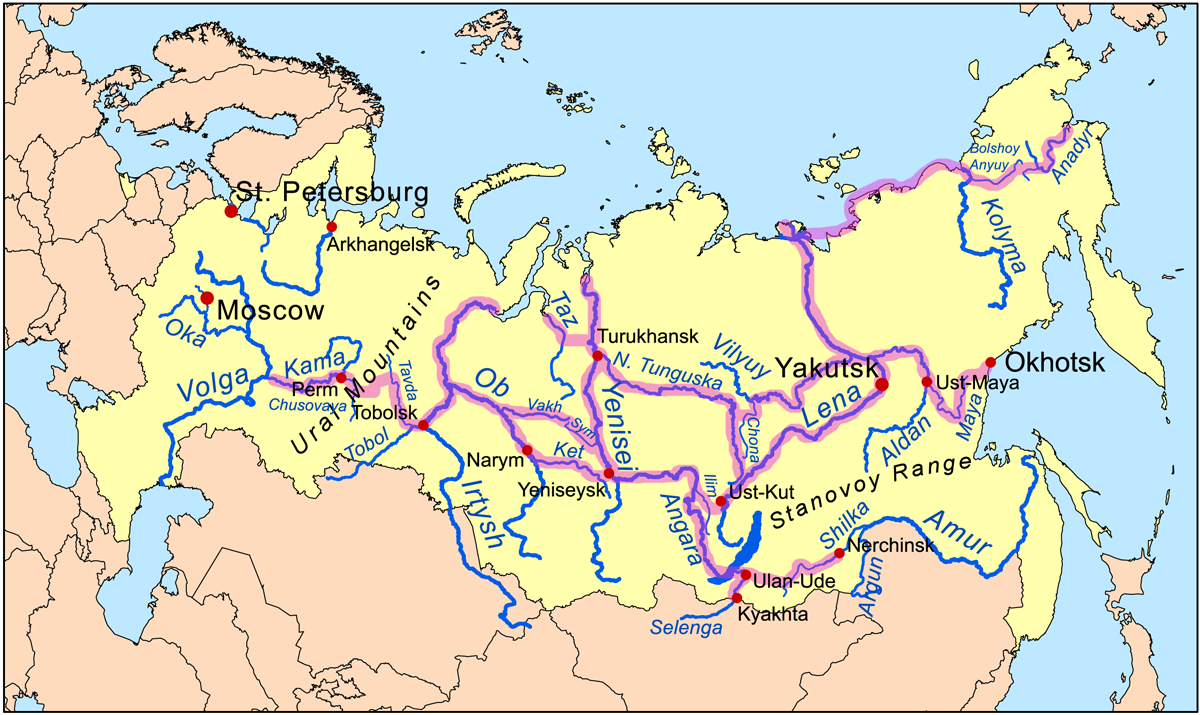
Kyllä, myötäilen näiltä osin artikkelin sanamuotoja: "...inspired by archeology and genetics" tai jotain sinnepäin. Erityisesti Kanskin metsäaro vaikuttaisi hypoteesin osalta lupaavalta, liittyen mm. yhteyksiin Angaran ja edelleen Lenan alueelle ja siten kontakteihin Ymjahtah-ryhmien kanssa, ks. esim.:
https://doaj.org/article/7ec149a431fc42 ... 767af115ca
https://upload.wikimedia.org/wikipedia/ ... utemap.png
-
Kinaporin kalifi - SuuBaltti
- Viestit: 6628
- Liittynyt: 14 Helmi 2011 19:18
Re: Vesakoski, Salmela, Piezonka Uralic archaeolinquistics
Kirjoittaja Jaska » 03 Elo 2025 01:01
Jaettu tokaarikeskustelu omaan ketjuunsa:
https://muinainensuomi.foorumi.eu/viewt ... f=9&t=3613
-----------------
https://muinainensuomi.foorumi.eu/viewt ... f=9&t=3613
-----------------
~ "Per aspera ad hominem - vaikeuksien kautta henkilökohtaisuuksiin" ~
Y-DNA: N1c1-YP1143 (Olavi Häkkinen 1620 Kuhmo? >> Juhani Häkkinen 1816 Eno)
mtDNA: H5a1e (Elina Mäkilä 1757 Kittilä >> Riitta Sassali 1843 Sodankylä)
Y-DNA: N1c1-YP1143 (Olavi Häkkinen 1620 Kuhmo? >> Juhani Häkkinen 1816 Eno)
mtDNA: H5a1e (Elina Mäkilä 1757 Kittilä >> Riitta Sassali 1843 Sodankylä)
-
Jaska - Ylihärmiö
- Viestit: 10156
- Liittynyt: 14 Helmi 2011 04:02
Re: Vesakoski, Salmela, Piezonka Uralic archaeolinquistics
Kirjoittaja Jaska » 14 Elo 2025 23:14
Laitetaan tännekin linkki ketjuun liittyen vastinekommenttiini:
https://muinainensuomi.foorumi.eu/viewt ... =21&t=3616
https://muinainensuomi.foorumi.eu/viewt ... =21&t=3616
~ "Per aspera ad hominem - vaikeuksien kautta henkilökohtaisuuksiin" ~
Y-DNA: N1c1-YP1143 (Olavi Häkkinen 1620 Kuhmo? >> Juhani Häkkinen 1816 Eno)
mtDNA: H5a1e (Elina Mäkilä 1757 Kittilä >> Riitta Sassali 1843 Sodankylä)
Y-DNA: N1c1-YP1143 (Olavi Häkkinen 1620 Kuhmo? >> Juhani Häkkinen 1816 Eno)
mtDNA: H5a1e (Elina Mäkilä 1757 Kittilä >> Riitta Sassali 1843 Sodankylä)
-
Jaska - Ylihärmiö
- Viestit: 10156
- Liittynyt: 14 Helmi 2011 04:02
Paikallaolijat
Käyttäjiä lukemassa tätä aluetta: Ei rekisteröityneitä käyttäjiä ja 2 vierailijaa